

The Unbearable Lightness of Post-Communism
What can post-communist transitory states teach us about the impact of late capitalism and the current state of the global economy?

We live in an increasingly turbulent and unpredictable world.1 Central to our way of life is the socio-economic system in which we find ourselves, increasingly referred to as “late capitalism.” It was first described in 1975 by the late Belgian Marxist economist Ernest Mandel as “a new epoch marked by expansion and acceleration in production and exchange.”2 Fifty years on, we are experiencing the effects of Mandel’s conclusion that wealth inequality, overconsumption, corporate dominance, financialization, and endless commodification are magnifying the unsustainable costs for human and non-human life alike.
Rather than weigh in on the causes or cures for this expanding order, I intend to give a personal snapshot of a period in my life that helped me make sense of our situation. My story begins in Britain in the 1990s and ends in the Czech Republic in the 2020s. My aim is to ask how the Czech experience of transitioning from totalitarian communism to free-market capitalism can inform us about our current trajectory. After having lived in the country’s capital Prague for nearly twenty years, I hope my experiences and takeaways can provide a useful perspective.3
I was born in London in 1984 but grew up in a small town south of Manchester through the 1990s until I left the United Kingdom in 2006. It was a comfortable suburban middle-class upbringing; safe, white, conservative, and, though only a twenty-minute train ride from downtown Manchester, largely isolated from urban Britain and those less fortunate.
It was the era of Tony Blair’s New Labour, coming in the wake of Conservative leadership and the Thatcherite privatization and deregulation of the 1980s. Leftist policies that had been the cornerstone of post-war Britain were now to be hollowed out for the sake of financialization and vast economic growth. Arguably, the dismal state of Britain in the 1970s helped rationalize this increasing economic liberalism. But over time, it felt as if Britain was pivoting towards the United States, where commercialization, commodification, and consolidation had become the new norms. And as costs rose, the culture changed. The death of the pub and the decline of the high street were visible symptoms of what I had come to believe was a larger problem—that capitalism kills culture, and culture sustains community.4
Like most adolescent millennials (or, as we were known at the time, Gen Y) growing up in the United Kingdom, I was raised on a diet of British and American music and film that taught me the virtues of progressive individualism, personal enlightenment, and—like most youth culture—rejectionism. Hip hop, grunge, and rave music all spoke to me in a relatable language that advocated for peripheral adherence and mainstream rejection. Meanwhile, films like Falling Down (1993), Fight Club (1999), and The Matrix (1999) tapped into what I saw as a sense of collective frustration about the encroachment of corporatization in society.
Having grown accustomed to being reminded that my generation would be the first to expect less financial security than their parents (unless you aimed for a career in finance, banking, or the IT sector), the demands of British work-life seemed antithetical to the future I wanted. I decided, therefore, to pursue a degree at Loughborough University’s Marxist-leaning politics department, where classes such as “Anti-Capitalism and Anti-Globalization” provided me a crash-course in Noam Chomsky, Naomi Klein, the 1994 Zapatista Uprising,5 and the 1999 Seattle riots or “Battle of Seattle.”6
As a graduate of this latest iteration of the global anti-capitalist movement, I decided to leave the United Kingdom for the Central European country of the Czech Republic, where a combination of intriguing socio-political realities made it an appealing choice.
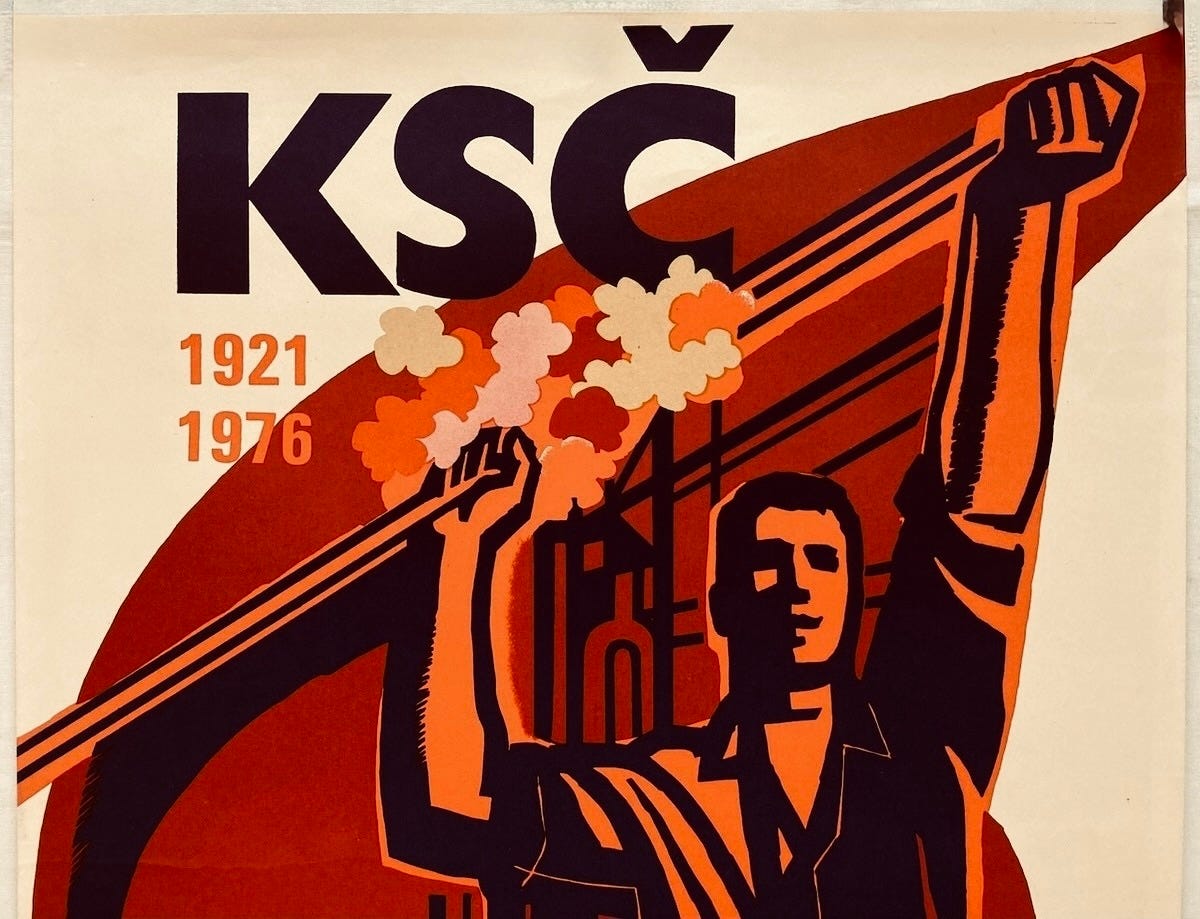
Prague in the mid-2000s was a place where cost of living met quality of life in ways one may expect from a post-communist state. Though it never experienced the same intensity of communist-totalitarianism as in the Soviet Union,7 Czechoslovakia’s brand of Soviet-style Marxist-Leninism (from 1948 to 1989) had numerous reverberations on Czech society. Encouragingly, I discovered the Czechs had retained free education (until twenty-six years old), universal healthcare, and a distinct lack of consumerism. Not immediately noticeable, however, was the extensive scarring caused by the regime, including: endemic governmental corruption, public suspicion of the state, a large shadow-economy, and a lack of trust between citizens.8 The last point I found particularly unnerving. To cite a popular Czech saying of the time on systemic governmental corruption, “the fish rots from the head.”
The Czech priority, therefore, was to progressively remedy the ills of the past with democratic political institutions, a market economy, the rule of law, and the growth of a civil society.9 Though the Pražák (Praguers) were proud of their historic urban center with its gothic and baroque architecture, they were tired of living in a poorly run museum. Modernity promised them a chance to feel a sense of normalcy.
For Western leftists like myself, we felt as though we had traveled through time, back to when the world was less complicated, less demanding, and much freer. Prague was a dirty, beautiful city, buzzing with culture and cosmopolitanism. Something new always seemed to be happening and the affordability of the city only made it more accessible. Rent was low (around £200-300), food was cheap, and beer (the national export) was even cheaper. In 2005, one Pound Sterling bought 43 Czech Koruna, and one beer cost around 17 Koruna. Working as an English teacher provided me an above average salary. And within a short space of time, I had found a community of like-minded seekers.
Unsurprisingly, some Czechs viewed us much like the American GIs in Europe in World War II: overpaid, oversexed, over here. Yet most seemed to like us, never fully comprehending why we had chosen to make their small republic our home. “Why are you here?” was a common question in those early days. “Why not London? Why not New York?” they would ask, fondly sharing stories of their time in the United Kingdom in the 1990s when they studied English working as an au pair. “I guess I love how free it is here,” I would respond. They struggled to understand. We each wanted what the other had; mutually exoticizing the other’s world prevented us from seeing each other clearly. Though there was nothing inherently different about the Czechs from the British, the contrast came from the influences of our respective socio-economic histories.
Time spent outside of Prague typically revealed a slower pace of life, with close communities and active traditions. Many still grew their own fruits and vegetables or had a variety of poultry in the backyard. Pickling or preserving their harvest for the winter season was common. And come fall, the whole nation would engage in the delicate art of mushroom picking—I would often receive a large jar of dried fungi from a Czech friend insisting they would provide numerous culinary possibilities. Early Friday afternoons would see a mass exodus of the population as they travelled to visit their parents and grandparents in other towns. Or, perhaps, to take a trip to the family chata (country cottage)—a place previously used to escape the regime—where songs around the fire and shots of homemade slivovice (Czech schnaps) would last long into the night.
The urban-rural rift I was used to in the United Kingdom was less obvious here; instead a greater continuity between both worlds existed. I attributed this to the influence of the regime. The arrival of communist rule in 1948 had stalled the post-war modernization of the 1950s and 1960s seen in Western societies. While fifty years of centralized state-rule had stifled economic growth and development, it inadvertently enabled the Czechs to keep stronger ties to traditional culture, something I felt was lost in Britain.10
Though I admired the Czech way of life, as a foreigner, the closest connections I was able to build were with my expat community (or bubble). In hindsight, our bohemian lifestyles were sustained not by our own convictions but by the unstable nature of the transition period, coupled with the unimposing attitude of the Czechs. We encountered few obstacles and often remained ignorant of the difficulties the locals faced. I soon realized there was something contradictory about a bunch of Western idealists (with financial backing) using a post-communist state for their anti-capitalist fantasies.
The irony was not lost on me that I had fled the capitalist West only to find myself in a country that was keen to emulate it. As we taught English to sustain our alternative lifestyles, the Czechs were learning a language that would give them access to the global economy. Fifty years of communism had left them tired and deeply cynical of leftist politics, and they rolled their eyes at people like me who arrogantly attempted to convince them otherwise. I soon learned there was a huge difference between “armchair socialism” and the reality of living under totalitarian communism. Arguing, as we often did, over the extent to which Soviet communism had been true to Marx was not the point; to most Czechs it was a failed experiment never worth repeating.11
In essence, Czechs wanted the same thing everybody else wanted: clean lines and modern living. And in time, subtle changes in consumptive habits shifted them away from the frugality I once found so admirable. But who was I to discourage them from the promise and affordability of an IKEA-lifestyle? My own apartment was filled with Swedish-flatpack!
It was almost preordained that Prague’s gradual gentrification would coincide with my own maturation of tastes and lifestyle. Where once we ate at menza (very cheap canteens), went on shoe-string road-trips, and clubbed in underground medieval cellars, we now sip overpriced wine and flat-whites, stare at laptops, and regurgitate the daily news cycle. The pendulum of post-communist modernity has swung further than expected, creating an unusually polished result. On recent trips to Vienna and Brussels, I was surprised to find a scruffiness and political antagonism that is largely vacant in the Czech capital these days. Prague continues to have a good amount of alternative vibrancy for the twenty-somethings, but the past energies of transitory turbulence are long gone.
Prague has come a long way from the days of my first encounter. The impact of foreign money and multi-billion Euro investments has become hard to miss, with cost of living and real estate prices skyrocketing beyond affordability. Though this is a worldwide problem, it has been felt more acutely in post-communist Europe as salaries remain comparably low to their Western neighbors. Post-COVID-19 inflation, increasing energy costs caused by the Russo-Ukrainian war, and falling real wages have also taken their toll. Meanwhile, economic wealth disparity between Prague and less affluent regions has also worsened. Despite this, post-communist living standards have doubled since 1989, and a boom in entrepreneurship has transformed the business landscape.
The Czechs have arrived late to free market thinking. But to give them credit, they are yet to contract many of the most irritating syndromes suffered by its Western adherents, namely: rat race competitiveness, an addiction to data-driven decision-making, a multitude of mental health issues, and ordering things that are not on the menu! My Czech colleagues assure me the financialization and corporate dominance of the West is a long way off. The aforementioned “simple life” has changed little since 2006, with many young Czechs concluding that mass consumerism and career living is not necessarily the way to go. If the Czechs have taught me anything, it is moderation. Extremes will always exclude and bring out the worst in us. If they can secure the gains they have made without losing sight of what makes their culture unique, there may still be hope for this seasoned Central European nation.
Sometimes referred to as the NAVI world: Non-linear, Accelerated, Volatile, and Interconnected. See: Hanne Jesca Bax and Gautam Jaggi, “What if disruption isn’t the challenge, but the chance?,” EY, June 26, 2025, https://www.ey.com/en_gl/megatrends/what-if-disruption-is-not-the-challenge-but-the-chanc.
David Elias Aviles Espinoza, “Unpacking late capitalism,” The University of Sydney, December 20, 2022, https://www.sydney.edu.au/news-opinion/news/2022/12/20/unpacking-late-capitalism.html.
I note here that the opinions and experiences in the essay are my own and do not represent the opinions or experiences of the Czech people.
My issue was more with shareholder-capitalism and reckless deregulatory measures that favored corporatization rather than an individual’s desire to make money.
A successful popular movement in Chiapas, Mexico against the North American Free Trade Agreement (NAFTA), now rebranded the United States-Mexico-Canada Agreement (USMCA).
40,000 people protested against the global free-trade policies advocated by the “Three Heads”: the International Monetary Fund (IMF), World Trade Organization (WTO), and the World Bank (now World Bank Group).
Czechoslovakia was a member of the Warsaw Pact and remained a “satellite state” of the Soviet Union until 1989.
After the Soviet invasion of Czech lands to crush the Prague Spring protests in 1968, a period of state repression began under the leadership of President Gustáv Husák. Known forebodingly as “normalization,” Husák used a system of secret police and civilian informants to create an environment of fear and mistrust that persisted well after the regime ended in 1989.
Jiří Pehe, “Czech Republic and Slovakia 25 Years after the Velvet Revolution: Democracies without Democrats,” Heinrich-Böll-Stiftung, Prague, October 31, 2014, https://cz.boell.org/en/2014/10/31/czech-republic-and-slovakia-25-years-after-velvet-revolution-democracies-without.
Britain in the 1930s, for example, had a much closer connection to its rural spaces.
The Czechs have remained tolerant of the Communist Party, which continues to be politically active. However, as of January 1, 2026, all dissemination of communist ideology has been banned in the Czech Republic, with penalties carrying jail sentences of 1–5 years. The reason for this is a recent increase in the popularity of communist ideas (particularly anti-NATO sentiments) in the wake of the Russian invasion of Ukraine.
 | A guest post by
|