

Is Inter-Class Solidarity Possible in a Stratified Community?
What might push someone in a position of privilege to side with the oppressed at their own expense? The peculiar setting of Western, private elite schools in Egypt offers us some answers.

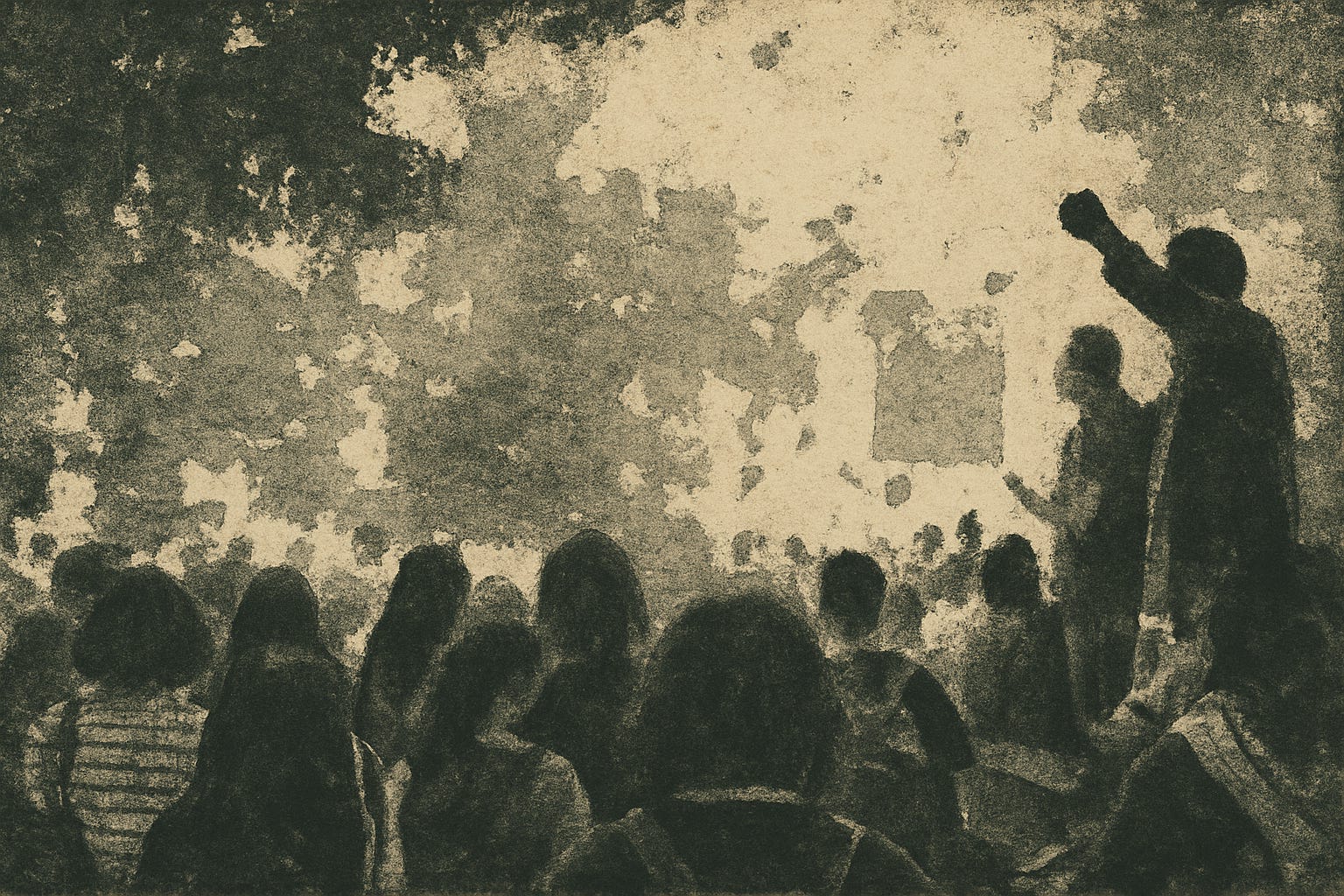
In early 2024, my wife and I joined the Columbia University protests against the genocide in Gaza. Around that time, I was in the process of finalizing my doctoral dissertation on Egyptian education and came to realize a connection between my work and the events taking place on campus. A peculiar moment during Passover prompted this realization—specifically, when a Jewish prayer circle formed and began praying for a free Palestine “from the river to the sea.” I wondered what drove them to stand up for Palestinians in this way and why, from their privileged standpoints, they would risk being shamed, doxed, or shunned.
I have long grappled with the question of what conditions or relational dynamics enable someone in a position of power to confront their privilege and become willing to relinquish aspects of it. However, in the context of my own research on Egypt, it was not primarily from a religious or ethnic perspective, but a class-based one. I tried to explore how privileged higher-class students who benefit from capitalist structural inequalities can be taught to genuinely empathize with, and act in the interests of, the exploited.
In the case of Egypt, fostering constructive inter-class solidarity can be achieved by encouraging students and teachers in international school classrooms to recognize the neoliberal and neocolonial forces that shape them. To my surprise, entering the field with a secular framework that assumed a clean separation between class and religion was quickly challenged. I found that this work not only required a critical examination of the inner structure of the international school itself but also revealed how deeply religious conceptualizations of class shape students’ understandings of social hierarchy and their place within it.
The Reality of International Schools in Egypt
While scholars debate when Egyptian public schooling began to decline, there is broad consensus that its deterioration has driven more affluent families toward private international schools over the past fifty years. Tristan Bunnell defines international schools as institutions “with a global outlook located mainly outside an English-speaking country delivering a non-national curriculum at least partly in English.”1 In Egypt, these schools offer British, American, French, German, and other curricula with annual fees ranging from $2,000 to $20,000. Often established as business ventures, they cater to the rising demands of the affluent by offering both social distinction and academic quality. Naturally, higher costs entail more elaborate selling points: Western teachers, luxurious amenities, swimming pools, sporting facilities, and high-tech classrooms.
Having attended, worked at, and studied at these schools myself, I have found that families don’t just enroll their children there in pursuit of academic quality, but to assimilate them into certain ways of being and knowing. This is evident through their curricula, which privilege Euro-American histories and effectively silence local ones. Students do not learn about Egypt’s involvement in the First and Second World Wars or the experiences of Jews in the Arab world, for example, but rather study the history of Europe’s Holocaust. This privileging of all things Euro-American manifests in the schools’ administrative structures as well. In particular, foreign teachers—seen as superior by parents who often conflate “Western” and “quality” education—are generally better compensated than their local counterparts.2 Paid in foreign currencies, foreign teacher-hires raise international schools’ administrative costs, which in turn gives them license to raise tuition. Perhaps more importantly, these schools fuel palpable class distinctions since they are often located in Cairo’s affluent, isolated outskirts. Students thus experience physical insulation alongside intellectual alienation.
But insulation and alienation are small prices to pay for parents, who are chiefly motivated by a desire to provide their children with access to international universities and the global economy. Shuning Liu terms this process the formation of the neoliberal subject, where class reproduction becomes vital for local and, critically, international mobility.3 In other words, parents are strategizing to ensure their children have a place among the global elite. Yet the position these students and their parents find themselves in, as “elites” in a country like Egypt, represents a paradox. Because international schools isolate students from their local contexts and interests while strengthening ties to Western ideals and global futures,4 they effectively produce a Fanonian postcolonial “national bourgeoisie.” By mediating the colonized-colonizer relationship, international schools translate Egyptian students’ local realities into languages and concepts palatable to their former colonizers.5 The students then become the “transmission line” between their nation and a “camouflaged” neocolonial capitalism.6
Considering the above, how can we cultivate inter-class solidarity in an international schooling system that propagates class differences within Global South communities? Is complete renunciation of privilege an ideologically reasonable and practical way to achieve genuine solidarity? The philosophy of Brazilian educator Paulo Freire can assist us here.7 Writing on the liberation of the mind, Freire focused primarily on the oppressed, emphasizing that “oppressors cannot be liberators” because only the oppressed are best placed to understand the significance of an oppressive society.8 Yet he also offered a path toward solidarity for oppressors, clearly distinguishing between “liberating someone” and “struggling with them for liberation” by “entering the situation of those with whom one is in solidarity.”9
In Freirian terms, “true solidarity” demands that affluent Egyptian students fully relinquish their status and privilege to join the oppressed in their struggle for liberation. However, their youth and limited societal power make such a sacrifice unrealistic, and it is furthermore difficult to ignore the pragmatic constraints of fully relinquishing one’s privilege. Still, I believe that, at the very least, meaningful exposure to the lived realities of those they may unintentionally oppress is essential. I wondered: Could this goal be achieved through changes to the curriculum?
Problematizing the International School
Previously, I had the opportunity to collaborate in developing a curriculum for the children of privileged elites at two Cairene international schools. The goal was to create a learning experience where high school students could reflect on their social positions in order to explore avenues of inter-class solidarity. Students investigated their own schools and contemplated not only their social standing, but also the broader status of Egyptian education.
The students offered raw insights into embedded ideologies that adults typically hide. Most began with blame. Unlike Freire’s oppressed, however, their blame was not self-directed but rather directed at the oppressed majority. This was a blame rooted in misplaced narratives of merit, in which the majority “did not work hard enough” to deserve these students’ schooling rights—something they believed they earned through their parents’ hard work. Moreover, when asked how they would engage with poverty, most of these young people felt that charity was enough to counter inequalities. This perspective was heavily influenced by their upbringing and even carried certain “religious” connotations. This reliance on charity as a response to inequality is tied to what Freire calls false generosity—acts that appear generous but in fact sustain uneven power dynamics by maintaining the dependency of the oppressed on those who hold power. By contrast, Freire argues, “true generosity consists precisely in fighting to destroy the causes which nourish false charity.”10
Despite their shortsightedness, the students also proved to be relatively malleable. Conducting structured interviews with working-class laborers like matrons and drivers on school grounds helped humanize them and allowed them to view everyday realities (which they would otherwise pass over) in a new light. Similarly, simulating variant household incomes helped them foster a rare understanding of decision-making under a more restricted budget. Accordingly, their notions of blame and charity began to shift. As they asked questions about their schools, they became more conscious of inequalities and moved toward a more empathetic understanding of the other. Many ended up acknowledging that much of their good fortune was not exclusively the result of their parents’ efforts—they began to recognize luck as a factor.
While the students did not fully appreciate the structural dynamics at play in their lives, these shifts in perception significantly influenced how they began to propose responses to poverty. When explaining how they would engage with class injustice, their answers revealed a more nuanced and deliberate form of action in pursuit of solutions, taking account of their abilities, privileges, and the problems at hand. Rather than simply throwing money at people to fulfill basic needs—as nearly all had initially suggested—students began to explore more targeted interventions in education. Some proposed buying internet subscriptions, while others suggested laptops. One student even expressed a willingness to personally teach someone English. These proposed actions did not call for macro-structural change through collective organizing, but they nonetheless reflected a subtle shift toward engaging with systemic issues. Still, they remained constrained within a neoliberal imaginary, incapable of envisioning alternatives beyond what already exists.
Notwithstanding the genuineness and intentionality behind their proposed actions, a sense of superiority persisted among the students. They not only felt entitled to decide what others’ needs were but also held an unquestioned distrust toward the people they sought to help. Despite showing some structural understanding of education’s role in social mobility, many assumed that the poor would still rely on begging if simply “handed” money. In other words, they presumed that poor individuals would not invest in their own education and thus could not be trusted to make sound financial decisions. This aligns with what Susan Benigni Cipolle describes as the ethics-of-charity mindset—an approach motivated by deficit thinking in which “doing for” the poor replaces their ability to do for themselves.11 These paternalistic attitudes, even among the youngest members of the privileged classes, remain a true obstacle to solidarity. Unless we begin from a standpoint of equality, any form of structural awareness risks becoming nothing more than a performative exercise.
Religion: The Missing Link?
Another significant challenge posed by Egyptian international schools is that they operate within a secular framework that enforces a dichotomous division between the social sciences and religious worldviews, despite the unwavering presence of the latter in students’ lives.
I noticed a huge discrepancy between what students said in our interviews and what they said in class during implementation. Many students—both Muslim and Christian—referenced religion when explaining poverty, with some even claiming that God had created social classes for a reason (and thus poverty was inescapable). For others, charity was mainly driven by religious notions such as zakat and sadaqa. Deeper dives revealed that students viewed wealth as a responsibility and a debt—not a privilege—to be repaid via charity. Interestingly, their sense of agency in resisting unfair structures was diminished by seeing God as an overwhelming force controlling their reality. Consequently, the students did not distinguish between profit and profiteering,12 where the latter is forbidden as exploitation, and in this regard their views demonstrated how religion and neoliberalism can quickly become enmeshed. Mona Atia defines this as “pious neoliberalism,” a phenomenon that blurs the lines between faith, economy, and governance.13
Despite their strong religious commitments, however, students and teachers agreed that religion’s place should be restricted to religious classes alone. Everyone seemed to agree that religion cannot be considered a “real” source of knowledge. How then can we truly foster solidarity with the other if we cannot even integrate epistemological splits within the self? How can we counter the negative view of the other that informs our actions if we cannot create learning experiences that interrogate our own beliefs?
Jack Mezirow, the godfather of Transformative Learning Theory, argues that any radical shift in one’s worldview is driven by a “disorienting dilemma.”14 This disorienting dilemma is usually an event that forces one to re-evaluate their beliefs. In the case of many young Jewish people today, the Gaza genocide might have been their disorienting dilemma, placing them on the path of becoming anti-war, anti-apartheid, and even anti-Zionist. But what do we do when the conditions for a disorienting dilemma are not present? What do we do in the case of young people—specifically, in Egypt—who are destined for positions of power and belong to an educational setting that fully isolates them from the realities outside of it?
The curriculum experiment I led attempted to trigger such reassessments, though it did not amount to a disorienting dilemma for the students since it only engaged them intellectually and cognitively, not experientially. Our instinct as educators is to protect our students from experiencing real discomfort because they are young. Yet, as the educational scholar Michael Zembylas says, without accepting the value of discomfort, teaching and learning miss important productive openings for transformation.15 Both teachers and students need opportunities to experience discomfort, without which cultivating true solidarity remains unviable.16
Our hope lies in problematizing the international school itself and making it a site of productive discomfort. It ought to be a place where students learn how such schools preserve the advantages of the elite while limiting others’ ability to access them; where patterns of exploitation are examined, whether in the roles of matrons, drivers, or teachers; and where the school’s profit-oriented philosophy is critically questioned for the part it plays in reproducing social class divisions. As Sean Fitzsimmons notes, many students in international schools are intellectually colonized because they “do not question the school’s use of ‘international’ terminology and instead believe that the Anglo-Western perspective promoted by the school is the globally accepted perspective.”17
The question then becomes, which schools would welcome such critical inquiries into their practices? And, if they do, how will they navigate and value the discomfort created by these inquiries? More importantly, would the same parents who yearn for their kids to integrate into the global establishment accept them? Would a critical inquiry of this sort be seen as anything other than undermining?
Creating inter-class solidarity is not just about accepting and normalizing discomfort as a pedagogical tool. It is also about allowing “non-objective” worldviews, like religion, to enter the conversation in order to challenge master narratives on inequality. Simply put, the false distinction between the religious and the secular must be challenged. By abandoning a paradigm that isolates religion as an exclusively private matter, we accept religion as an embodied, lived practice. This in turn will allow sharper debates around poverty, exploitation, and structural inequality to surface from Egyptian teachers and students alike.
The Jewish prayer circle with which I started this essay represents a moment of reconciliation between religious belief and political ideology. It was a moment of reclaiming religion and declaring: “this is mine, this is what it is for.” Similarly, international school classrooms can carve out room to critically engage with salient religious interpretations of socioeconomic class that tend to legitimize and re-produce capitalistic ways of seeing the world. By tying these to religious histories and social thought, we can challenge neoliberal views that obstruct solidarity. The idea that religion only belongs in “religion class” can be confronted by contesting the monopoly over who gets to speak about religion, broadening the range of perspectives students are exposed to, and ultimately challenging prevailing narratives that have normalized capitalism in religious thought.
Tristan Bunnell, International Schooling and Education in the ‘New Era’: Emerging Issues (Bingley, UK: Emerald Group Publishing, 2019), 1.
Yasmine A. Khorshed, National vs. International Schools: Factors Influencing School Choice in Egypt; The Voices of Parents and Students (2014).
Shuning Liu, Neoliberalism, Globalization, and “Elite” Education in China: Becoming International (New York: Routledge, 2020).
Tim Dunne and John Edwards, “International Schools as Sites of Social Change,” Journal of Research in International Education 9, no. 1 (2010): 24–39.
John E. Drabinski, Frantz Fanon (New York: Routledge, 2019).
Frantz Fanon, “Pitfalls of National Consciousness,” New Agenda: South African Journal of Social and Economic Policy 2017, no. 66 (2017): 36–40.
Paulo Freire, Pedagogy of the Oppressed (New York: Bloomsbury Publishing USA, 2018).
Freire, Pedagogy, 45.
Freire, Pedagogy, 49–50.
Freire, Pedagogy, 45.
Susan Benigni Cipolle, Service-Learning and Social Justice: Engaging Students in Social Change (Lanham, MD: Rowman & Littlefield Publishers, 2010).
Zaidi Sattar, “The Ethics of Profits in the Islamic System,” Islamic Quarterly 32, no. 2 (1988): 69.
Mona Atia, Building a House in Heaven: Pious Neoliberalism and Islamic Charity in Egypt (Minneapolis: University of Minnesota Press, 2013).
Jack Mezirow, “Transformative Learning Theory,” in Contemporary Theories of Learning, ed. Knud Illeris (New York: Routledge, 2018), 114–128.
Michalinos Zembylas, “‘Pedagogy of Discomfort’ and Its Ethical Implications: The Tensions of Ethical Violence in Social Justice Education,” Ethics and Education 10, no. 2 (2015): 163–174.
Michalinos Zembylas, “Practicing an Ethic of Discomfort as an Ethic of Care in Higher Education Teaching,” Critical Studies in Teaching and Learning (CriSTaL) 5, no. 1 (2017): 1–17.
Sean Fitzsimons, “Students’ (Inter)National Identities within International Schools: A Qualitative Study,” Journal of Research in International Education 18, no. 3 (2019): 274–291, at 286.
 | A guest post by
|
Very interesting piece! I can’t speak for Egypt, but as someone who went to an international school or two in other countries… I think what opened my eyes was sustained encounters with *peers* who did not have things that I took for granted. Not saying it isn’t valuable to learn about the lives of janitors, bus drivers, etc, but I think there are other points of difference (even just the age difference) that can hinder students from feeling solidarity. Meanwhile, there’s something that happens when you encounter people your own age living in the same city having a very different experience.
For me, this happened when I joined a youth theatre group that had me together with students from the local public schools. As I got to know them and saw how different their lives and concerns were, that’s when I started to notice what a bubble we were in at the international school…